Provenance
Where did this chart come from? Who produced the underlying data, who published it, and what can be traced versus what remains unknown at the collection level?


Chart-Ed | Data Forensics

Advanced audit
Trust, provenance, construction, and responsible-use audit.
DLL 5-6
Students separate what the evidence authorizes from what remains unlicensed, unknown, or responsibly bounded - domain by domain, across eight forensic lenses.
Audience
AP · Honors · Advanced Secondary
Format
PDF student + teacher pack
Price
$13.99
Reading a chart.
Auditing one.
Data Forensics asks a different question than any other product in this line. Not: what does this chart show? But: can this chart be trusted, and for what?
What this is
Every other Chart-Ed product works within the chart as given. Data Forensics examines the chart itself: its provenance, construction choices, representation claims, and inference limits. Students produce a bounded trust verdict supported by visible evidence and disclosed metadata.
This is the work of a researcher, journalist, policy analyst, or careful reader who understands that a chart is not a neutral window onto facts. It is an artifact, produced by someone, from somewhere, for some purpose.
Provenance
Where did this chart come from? Who produced the underlying data, who published it, and what can be traced versus what remains unknown at the collection level?
Construction choices
How were the values measured, processed, and visualized? What transformation and framing decisions are disclosed, and what remains opaque?
Inference limits
Which claims does the disclosed evidence license, and which claims go beyond what the artifact can authorize, regardless of how plausible they sound?
Audit layers
Students work through every domain using the same three-part structure: Disclosure Gaps, Observed Evidence, Boundary Implications.
Domain 1
What do we know about where this artifact came from, and what remains unknown about its origin or incentives?
Domain 2
How were observations selected, and can the displayed values be taken as representative of a broader population?
Domain 3
How were the displayed values measured or produced before they became a chart?
Domain 4
What happened between raw data collection and the final displayed values, and what of that pipeline is disclosed?
Domain 5
How does the chart visual form shape what viewers notice, compare, or assume?
Domain 6
Which claims are licensed by the disclosed evidence, and which claims go beyond it?
Domain 7
What time frame, historical baseline, or comparative context is disclosed, and what remains unanchored?
Domain 8
How can this artifact be used responsibly, and what unknowns must be labeled as unknown before it is shared or cited?
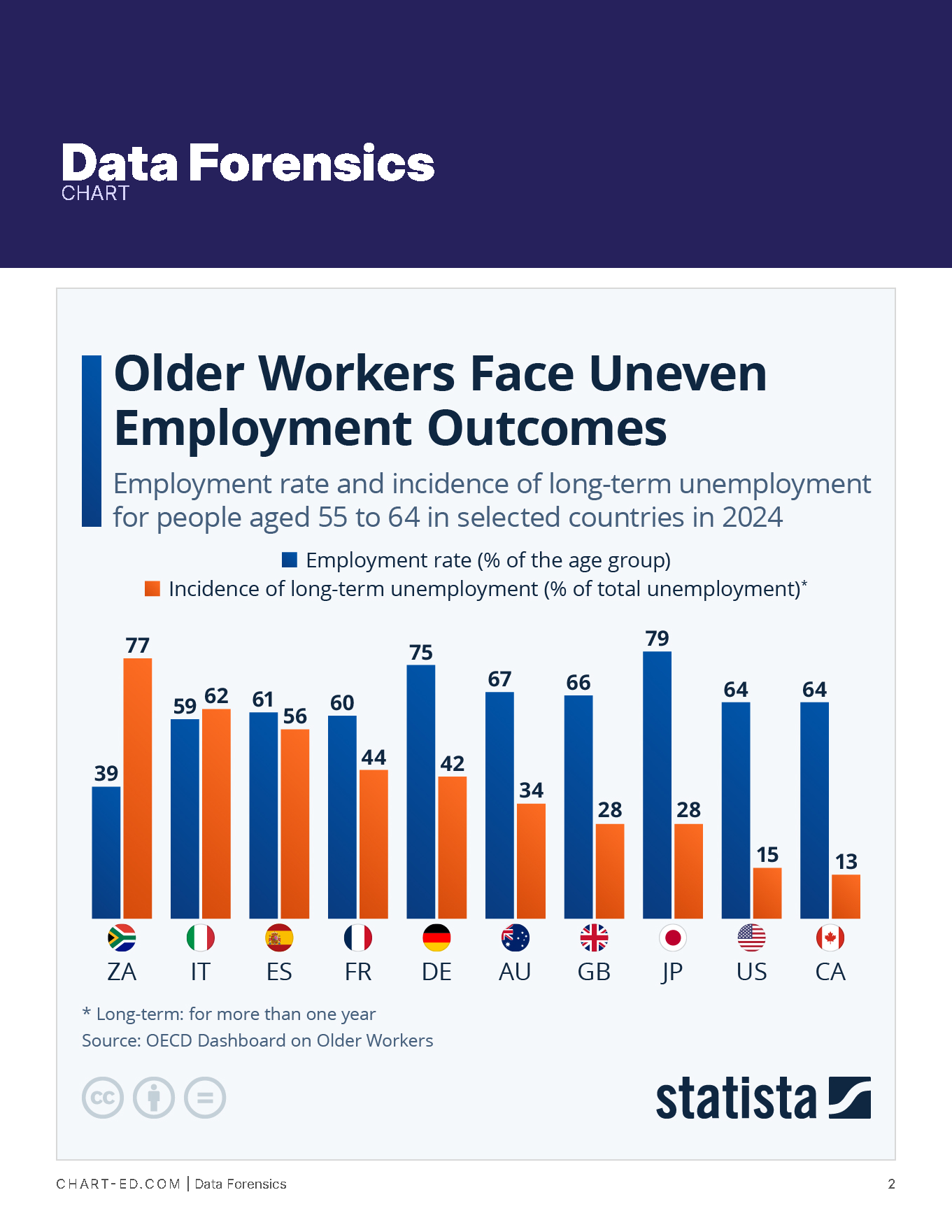
The chart artifact
Every Data Forensics pack is built around a single real-world chart, but students do not begin by reading it for what it shows. They examine it as an artifact: a published object with an origin, a production process, disclosed and undisclosed metadata, and a set of claims it can and cannot authorize.
What is disclosed becomes the evidentiary foundation. What is not disclosed defines the boundary of every claim.
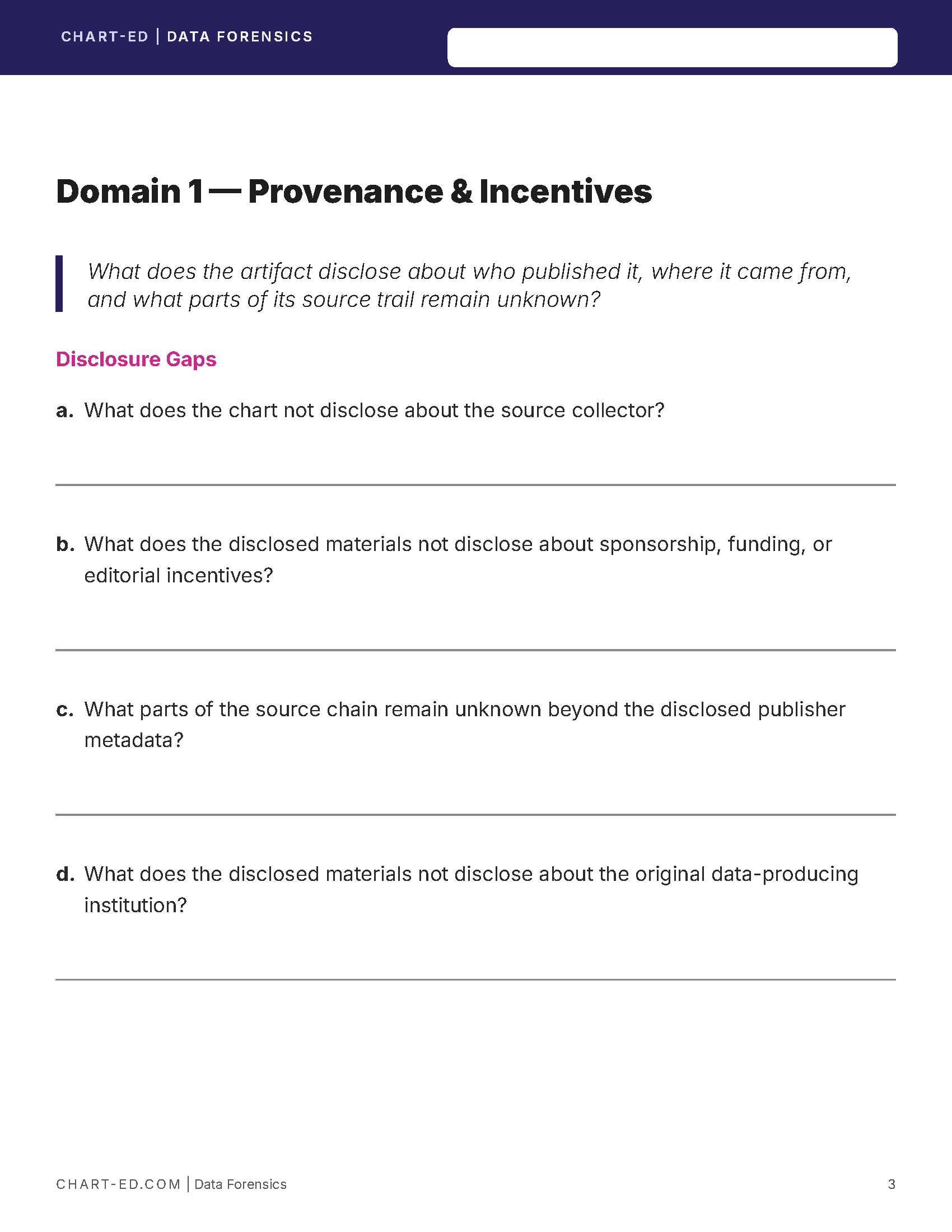
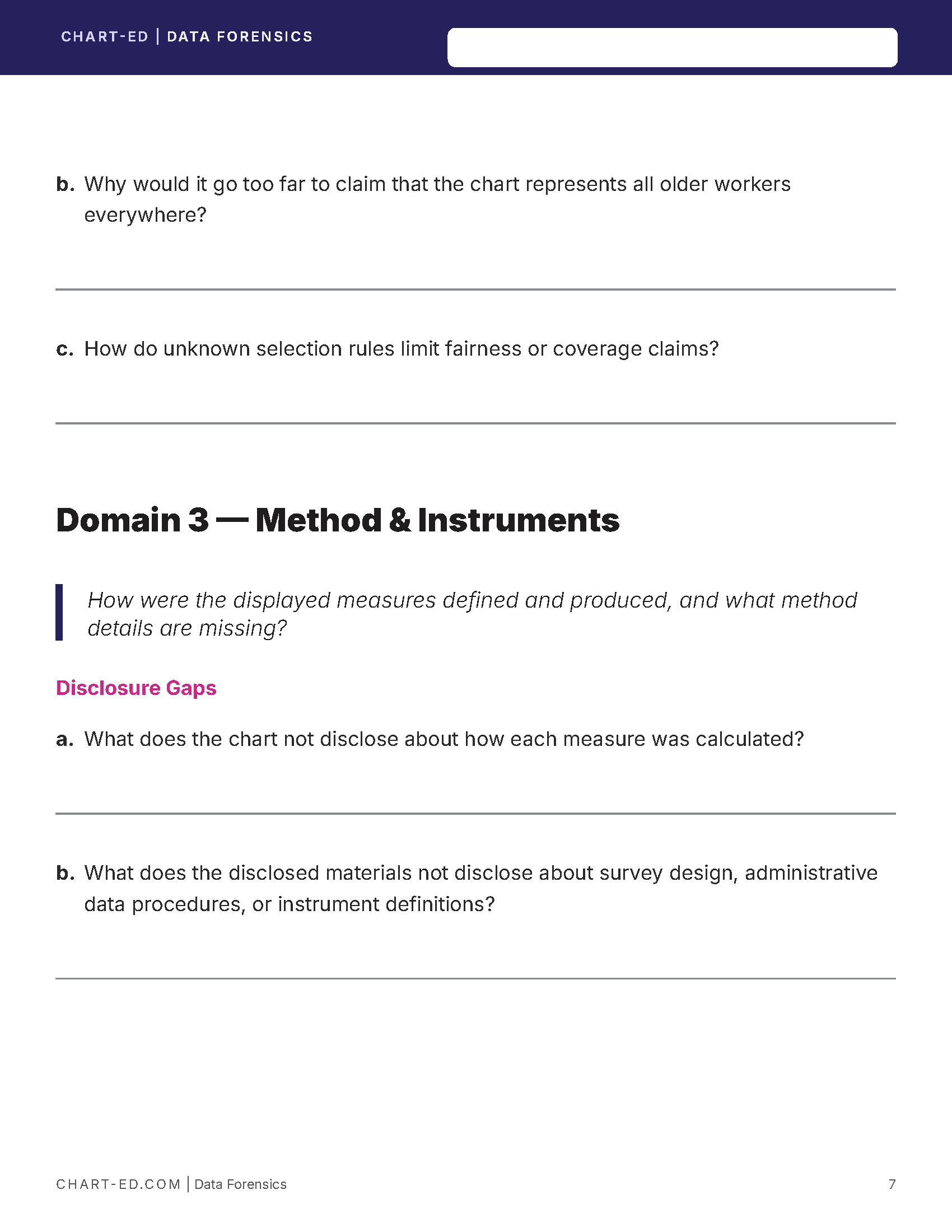
Student audit pages
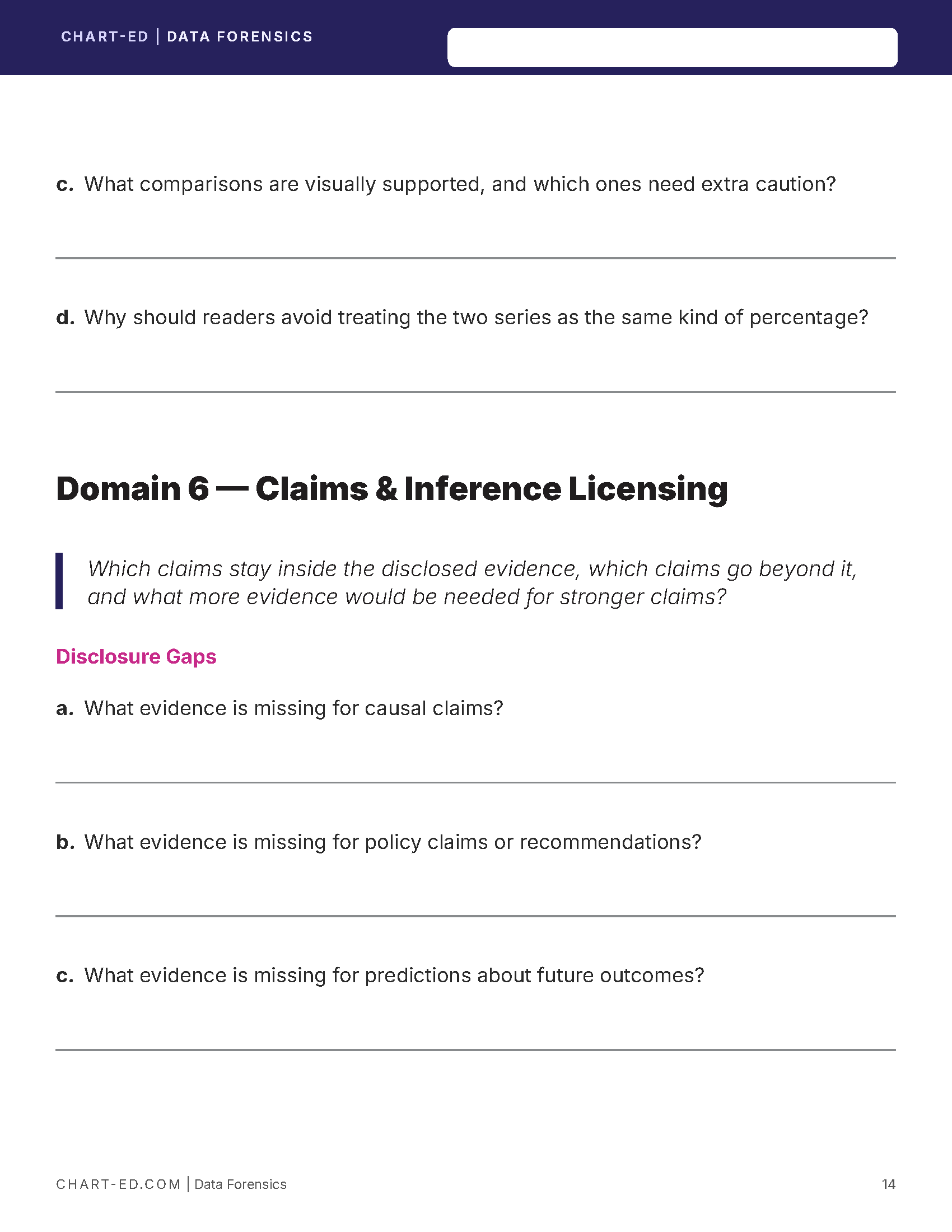
Every domain is structured identically so students develop the habit of a professional forensic reader: Disclosure Gaps, Observed Evidence, and Boundary Implications.
Missing information is not a gap in the student's knowledge. It is a documented feature of the artifact's disclosure. Students report what can be verified, then produce bounded claims.
Teacher Edition
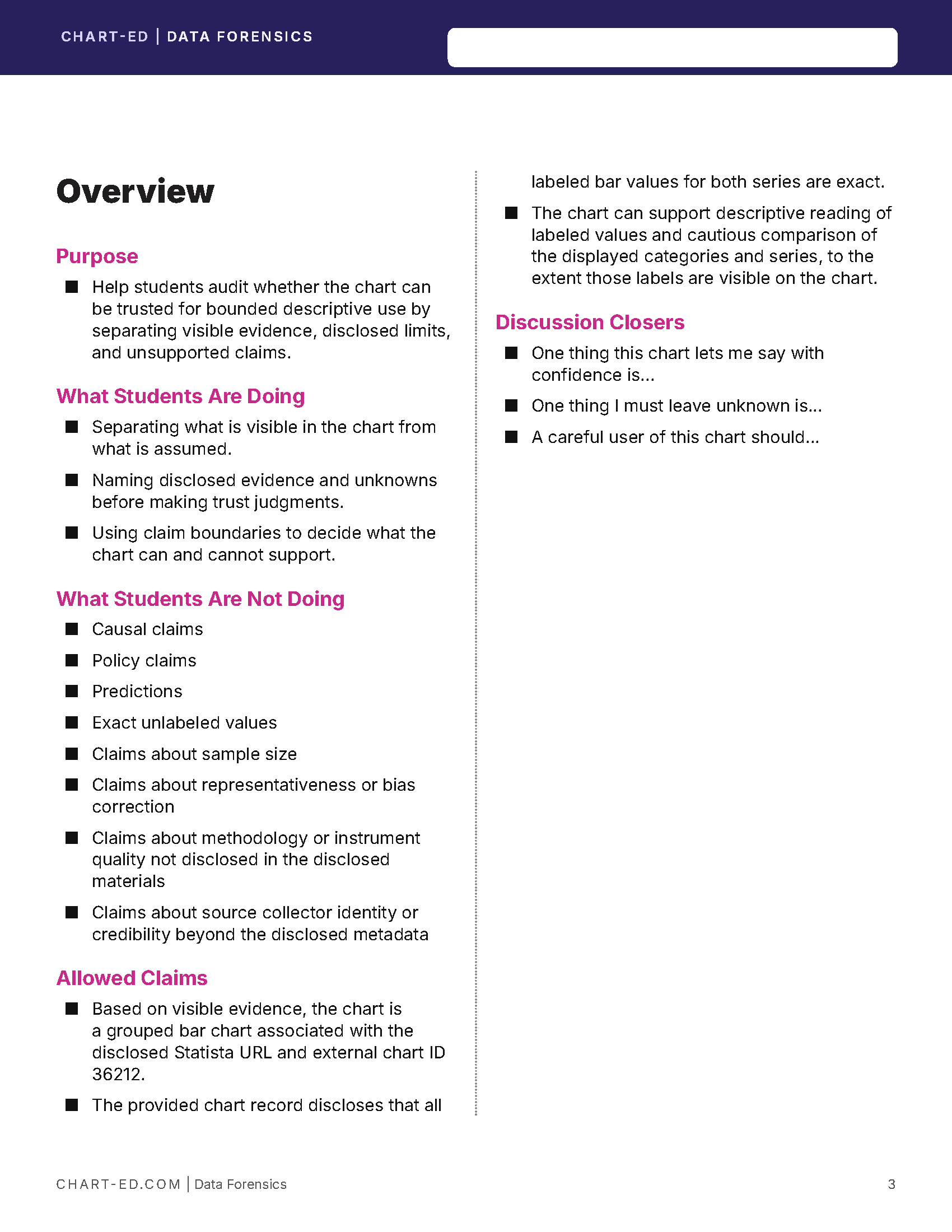
The Teacher Edition opens with the product governance framework: what students are doing, what students are not doing, and the complete Licensed and Unlicensed Claims list for the chart in the pack.
Discussion closer
"Should this data artifact be trusted? Write a bounded answer using the phrase 'trusted for bounded descriptive forensic use' - only if you also state the limits."
These are not discussion starters. They are forensic closing arguments written in language students can use directly.
Claims licensing
The Teacher Edition includes a complete Licensed and Unlicensed Claims list specific to the chart in each pack.
Licensed claims
What the disclosed evidence authorizes:
Unlicensed claims
What goes beyond what the artifact can support:
"Trusted for bounded descriptive forensic use - only if you also state the limits."
Overview page
A full governance document: purpose, what students are and are not doing, complete Licensed and Unlicensed Claims, and Discussion Closers.
Discussion closers
Three structured forensic prompts that close the audit with a bounded trust verdict, construction description, and responsible-use statement.
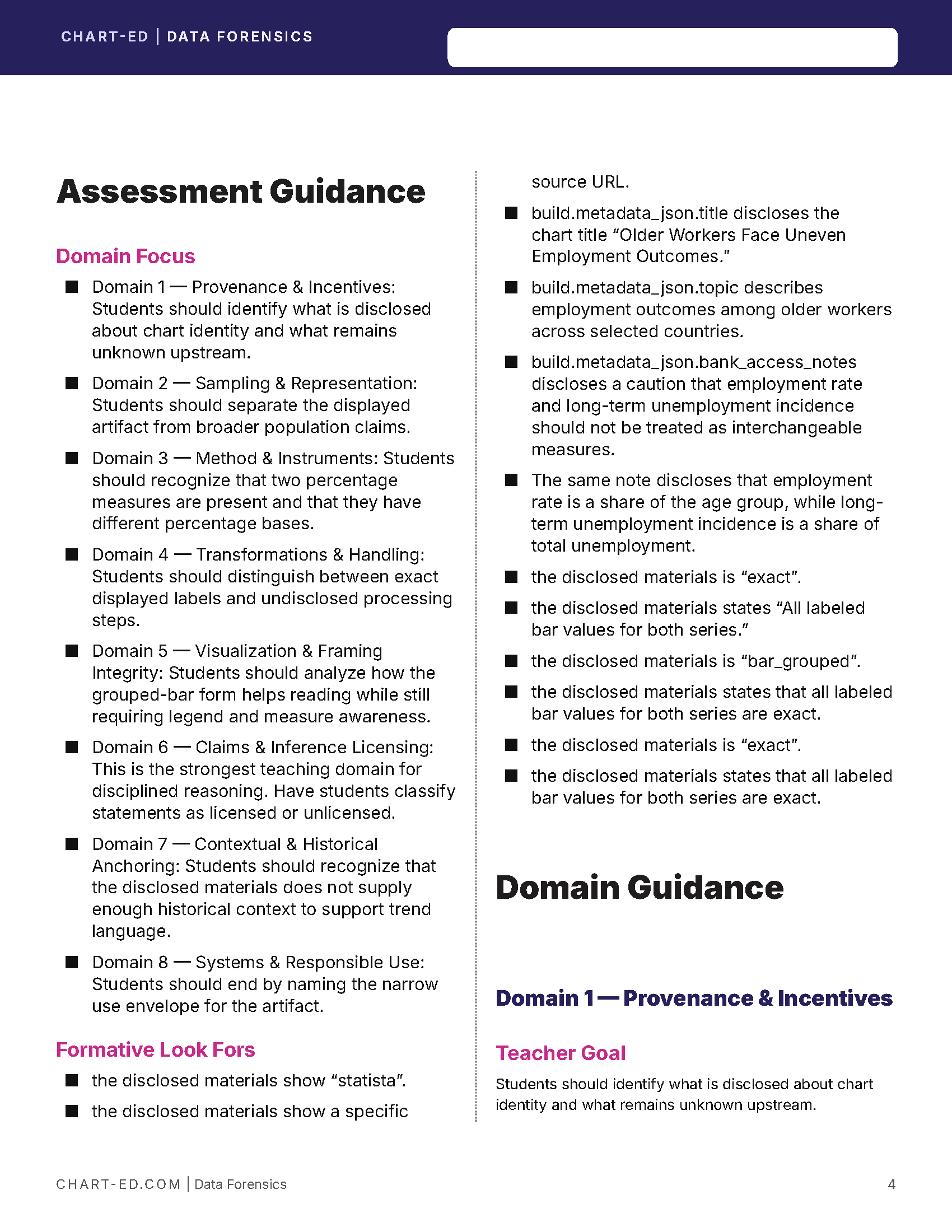
Domain-by-domain teacher goals
For all eight domains, a Teacher Goal paragraph states what the student audit page is correctly doing, so review is focused and consistent.
Licensed vs. Unlicensed Claims
A complete claims framework specific to the chart in each pack, written in language students can quote directly in bounded conclusions.
Evidence needed for stronger claims
Where disclosed evidence falls short, the TE names what additional evidence would be required: sampling documentation, methods, transformations, or historical baselines.
Assessment guidance page
A single-page domain-focus summary that maps Teacher Goals across all eight domains when reviewing student work across a full audit.
Data Forensics is designed for courses where students are expected to audit evidence, bound their conclusions, and reason about what data can and cannot authorize.
AP & Dual Enrollment
AP Language, AP Environmental Science, AP Government, AP Statistics, and dual-enrollment research writing, where evidentiary weight is a graded skill.
Research Methods & Inquiry Courses
Courses that ask students to design research questions, evaluate existing data, or produce evidence-based arguments from data sources.
Honors & Advanced Secondary
Honors English, social studies, and advanced science electives where students need to distinguish what data shows from what data proves.
"Most critical thinking instruction tells students to question sources. Data Forensics gives them the exact questions, and the forensic framework to answer them with evidence."
AP and Honors students are not short on critical thinking instincts. What they lack is a protocol for deciding what trust depends on, how to document what they know versus what they are assuming, and how to produce a bounded trust verdict.
Data Forensics provides that protocol: eight domains across every dimension that affects trustworthiness, and a three-part structure for separating what is known from what is assumed.
Not
A source evaluation checklist
It is
A domain-by-domain forensic audit framework that produces bounded, evidence-supported trust verdicts
Not
Critical thinking in the abstract
It is
A structured protocol for distinguishing licensed claims from unlicensed ones, applied to a specific real-world chart artifact
Not
A product for general classroom use
It is
Purpose-built for AP, Honors, dual enrollment, and research-methods courses where source evaluation is a graded competency
Product carousel
Choose a chart artifact, then select your grade band.
Data Forensics
Advanced source and evidence audits for honors, AP, and research settings where students ask whether a chart can be trusted and what it actually authorizes.
Browse all Data Forensics packs in the store, or use the Chart Generator to find a chart that fits your subject area and instructional context.
The Graph Literacy Brief
Teaching Guides, classroom moves, and free resources for helping students reason with evidence.
You will receive Chart-Ed articles, classroom moves, free resources, and product updates. Unsubscribe anytime. Privacy Policy.