

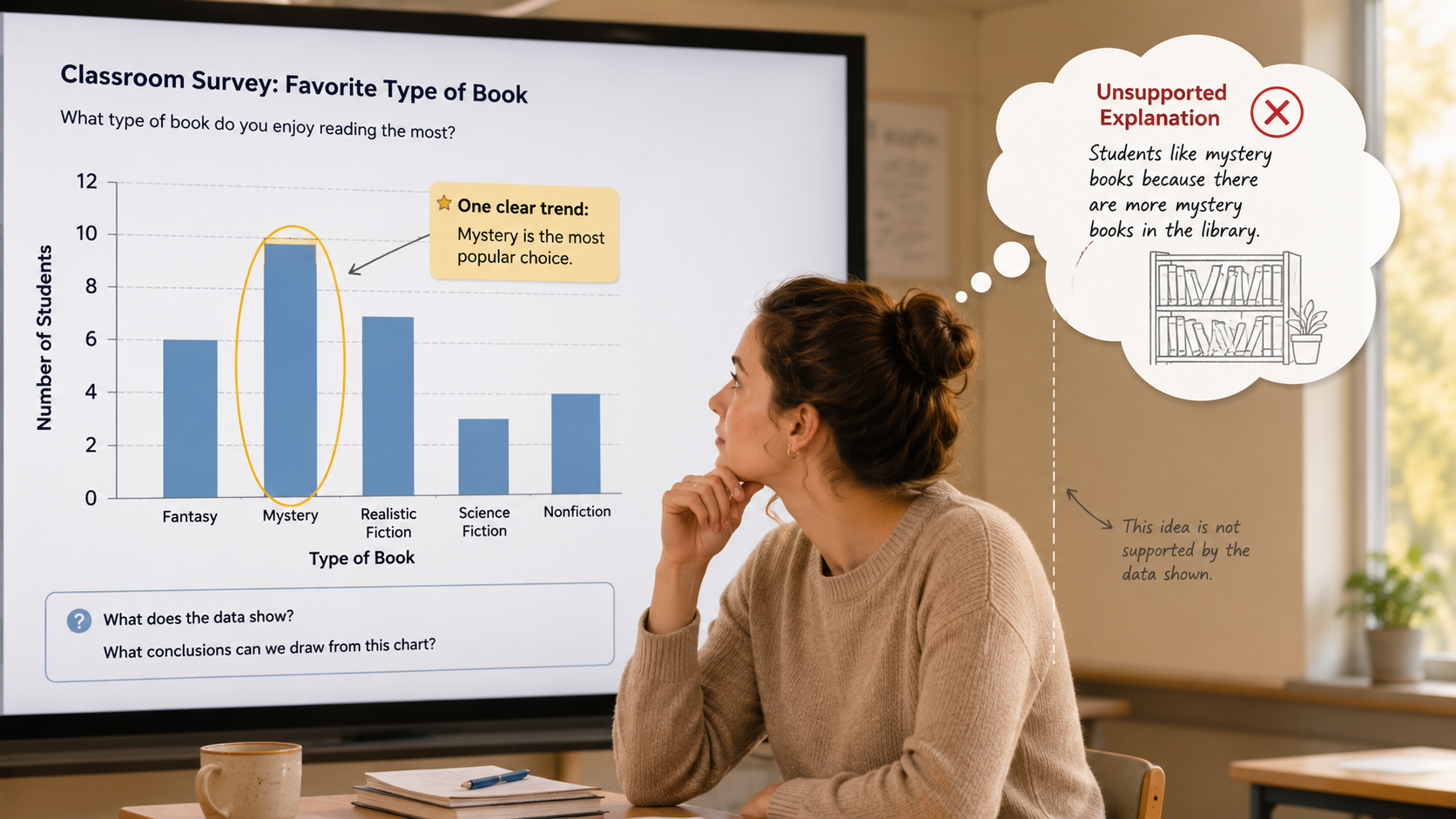
The Fastest Way Students Overread Data
You have probably seen it happen in a chart discussion. A student notices a pattern, feels the pattern is meaningful, and quickly explains why it happened.
The problem is not that the student is careless. The problem is that charts invite stories. A line goes up, two bars differ, or two patterns appear together, and the mind wants to turn what it sees into an explanation.
That leap from "I see this" to "this caused that" is one of the fastest ways students overread data.
The Classroom Moment
Imagine a simple classroom chart showing two summer patterns: ice cream sales rise, and reports of shark encounters also rise. A student says, "So ice cream causes shark attacks."
The chart may show two things increasing at the same time. It does not show that one caused the other. The student has moved beyond the evidence in the display.
That kind of overreading can happen with any chart. Test scores rise after a new schedule. Attendance falls during a rainy month. A bar is taller for one group than another. Students often reach for an explanation before they have named what the chart actually supports.
Why Students Overread
Students are trying to make meaning. That is a good instinct. The teaching move is not to shut it down.
But visible patterns and explanations are different kinds of claims. "Both lines rise in summer" is a chart-based observation. "Ice cream causes shark encounters" is a causal explanation. The first can come from the chart. The second needs more evidence.
When students do not separate those claim types, they can sound confident while moving away from the data.
The One-Question Intervention
When a student overreads, try asking:
What in the chart tells you that?
The question is gentle, but it does important work. It sends the student back to the evidence without embarrassment. It also helps the whole class hear the difference between what the chart shows and what someone thinks might explain it.
You might follow with:
- What can we say for sure from this chart?
- What is a possible explanation?
- What would we need to know before making that claim?
The goal is not to stop students from wondering. It is to help them label the difference between observation, inference, and explanation.
Make It A Classroom Habit
Use the question often enough that students begin to ask it themselves. When someone makes a claim, the class learns to look for the part of the display that supports it.
That habit matters. It turns chart reading from answer-getting into evidence-checking.
A good next step is to pair the question with a short sentence frame:
The chart shows ____. It does not yet show ____.
That frame gives students permission to be precise without feeling like they have failed to interpret.
For more ways to build this habit, connect this move to the broader routines in How to Teach Chart Evidence and to Data Ascent discussion prompts, where students practice matching claims to visible evidence.
The next time a student tells a story the chart does not yet support, pause before correcting them. Ask, "What in the chart tells you that?" The answer will show you whether they are reading evidence or racing ahead of it.