

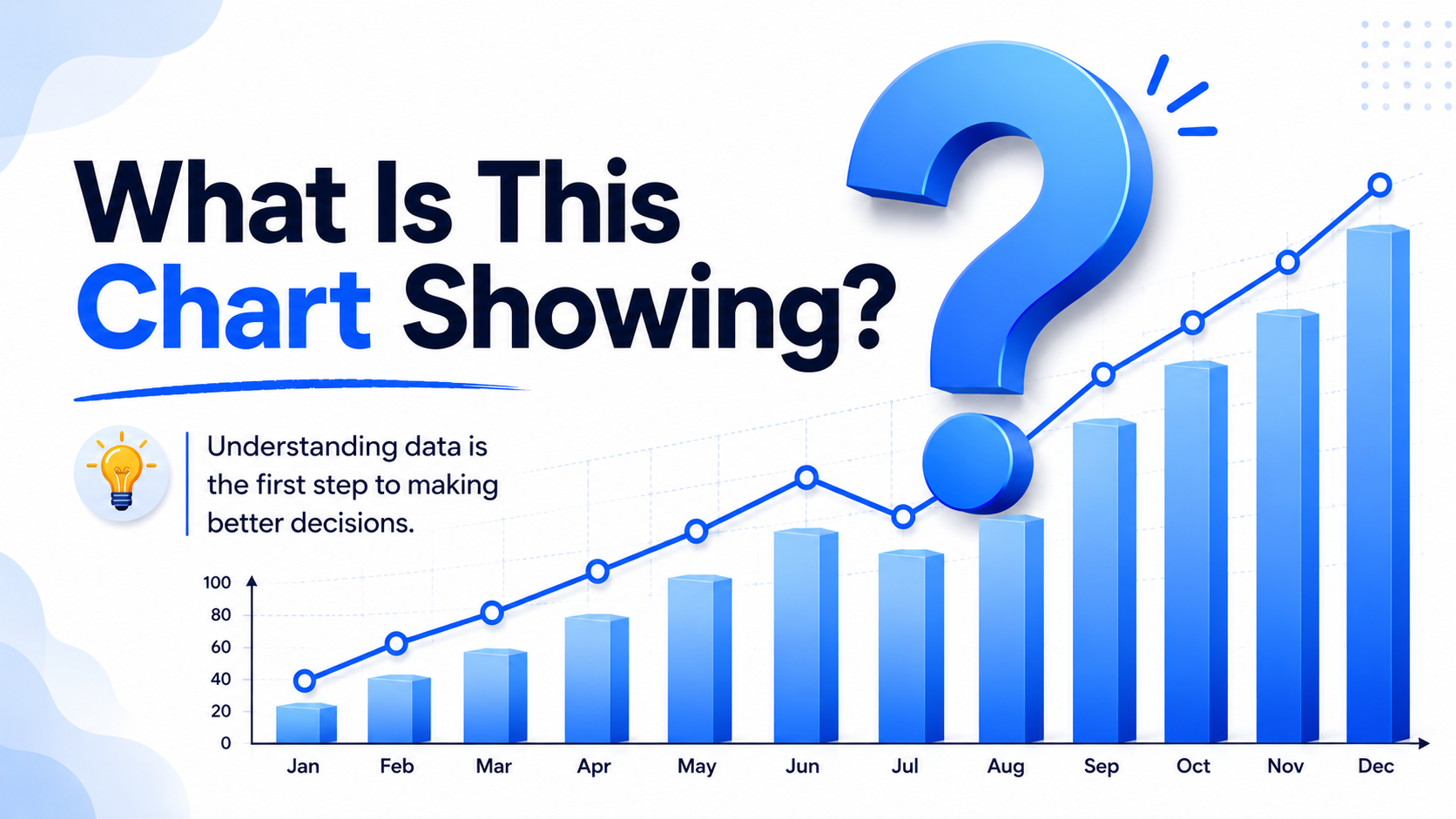
One Question to Ask Before Reading Any Chart
A single question, asked before students even begin to analyze a chart, can make chart reading calmer, clearer, and more deliberate. It is simple, quick, and works with any graph you already use, with no extra prep needed.
The Pre-Reading Question That Changes Everything
"What is this chart showing?" That is it. Before you hand out any analysis worksheet or launch into a data discussion, pause and ask your class this one question. It is deceptively simple, but it does something powerful: it gives every student a low-stakes entry point. There is no wrong way to answer it, just a nudge to look at the title, axes, labels, and overall shape of the data before diving into the numbers. This small shift helps students orient themselves, reducing anxiety and setting a purposeful tone for deeper work.
Why It Works
When we jump straight into "Where is the maximum?" or "What trend do you see?" , students often zero in on one data point without understanding the bigger picture. A student might point to the tallest bar, for example, before noticing that the axis starts at 80 instead of zero, or that the categories compare different years.
Asking "What is this chart showing?" encourages them to take in the whole display first: the title, chart type, categories, scale, and units. This aligns with what experienced teachers know: learners need a moment to notice before they can wonder or reason. You may recognize this as the heart of the Notice and Wonder routine from the Math Forum community.
Over time, this habit builds chart awareness. Students begin to automatically scan the essentials before interpreting, a skill that transfers to every subject where data appears.
Try It Tomorrow: A 5-Minute Routine
Here is a no-prep routine you can start tomorrow:
- Display a chart. Any chart will do: from a textbook, a news article, or a classroom data set.
- Ask, "What is this chart showing?" Say it as an invitation, not a quiz.
- Give 30 seconds of silent think time. Let students' eyes wander over the display.
- Share out briefly. Hear a few responses, then summarize what the class noticed. No correction needed yet.
- Transition to your regular lesson. Use this as a warm-up, an exit ticket, or a bridge into deeper data work.
For younger students, the question can become "What do you see in this picture or chart?" For older students, follow it with "What would you need to know before trusting this chart?" You will notice that students start paying attention to elements they used to skip: labels, units, and the shape of lines. And because it is a consistent routine, they will know what to expect and feel safer sharing their observations.
Where to Find Your Next Chart
Once students have practiced the habit, they need a steady supply of charts worth looking at. Chart Bank is designed for that kind of quick classroom practice, with charts and supporting routines teachers can use as warm-ups, discussion starters, or lesson bridges. The public URL still needs verification before publication, so do not publish the link until the live destination is confirmed. Start with one chart, one question, and one minute of quiet looking.